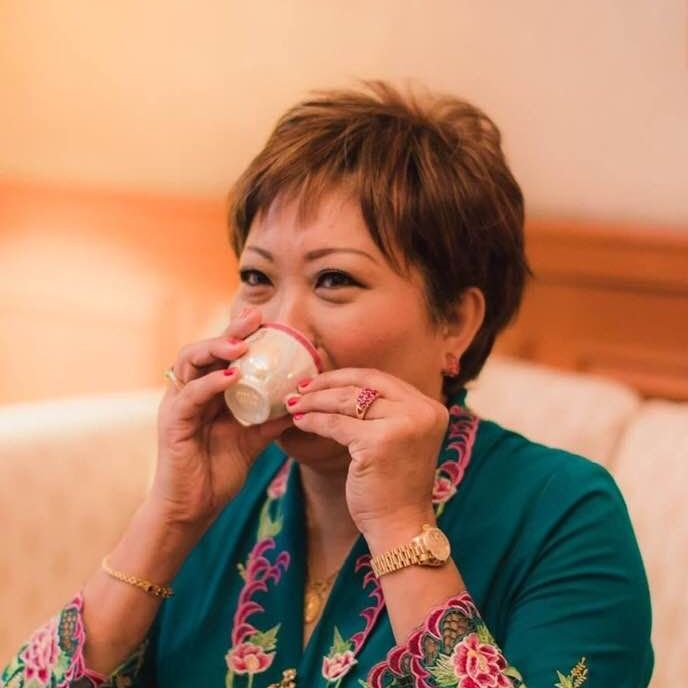
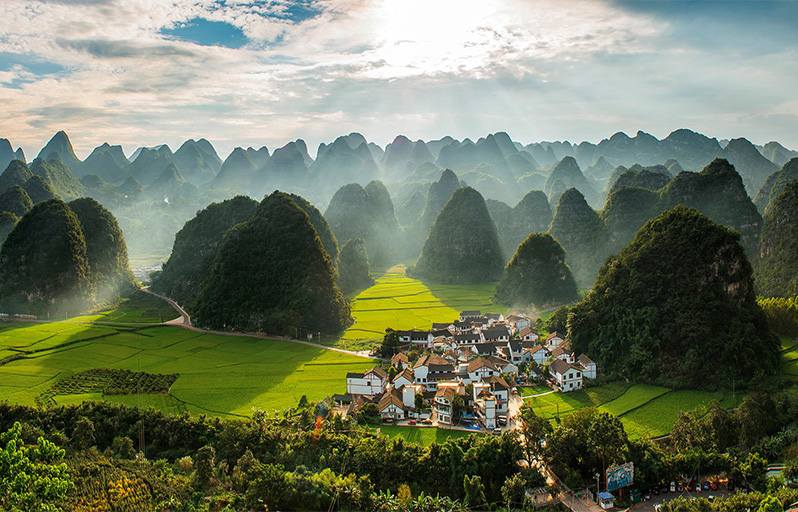
Guizhou didn’t unfold for me like a checklist of sights—it felt more like stepping into a living story, one stitched together by mountains, mist, and the unmistakable warmth of the Miao people.
Guiyang: A Gentle Beginning
I began in Guiyang, a city that hums with energy but never feels overwhelming. By night, it softens—lights reflecting off glass buildings, the air cooling just enough to invite wandering.
At Qingyun Road Pedestrian Street, the buzz of street food, laughter, and neon signs felt like a celebration in motion. It’s the kind of place where you don’t plan dinner—you follow your nose and your curiosity.
Yelang Valley: A Surreal Escape
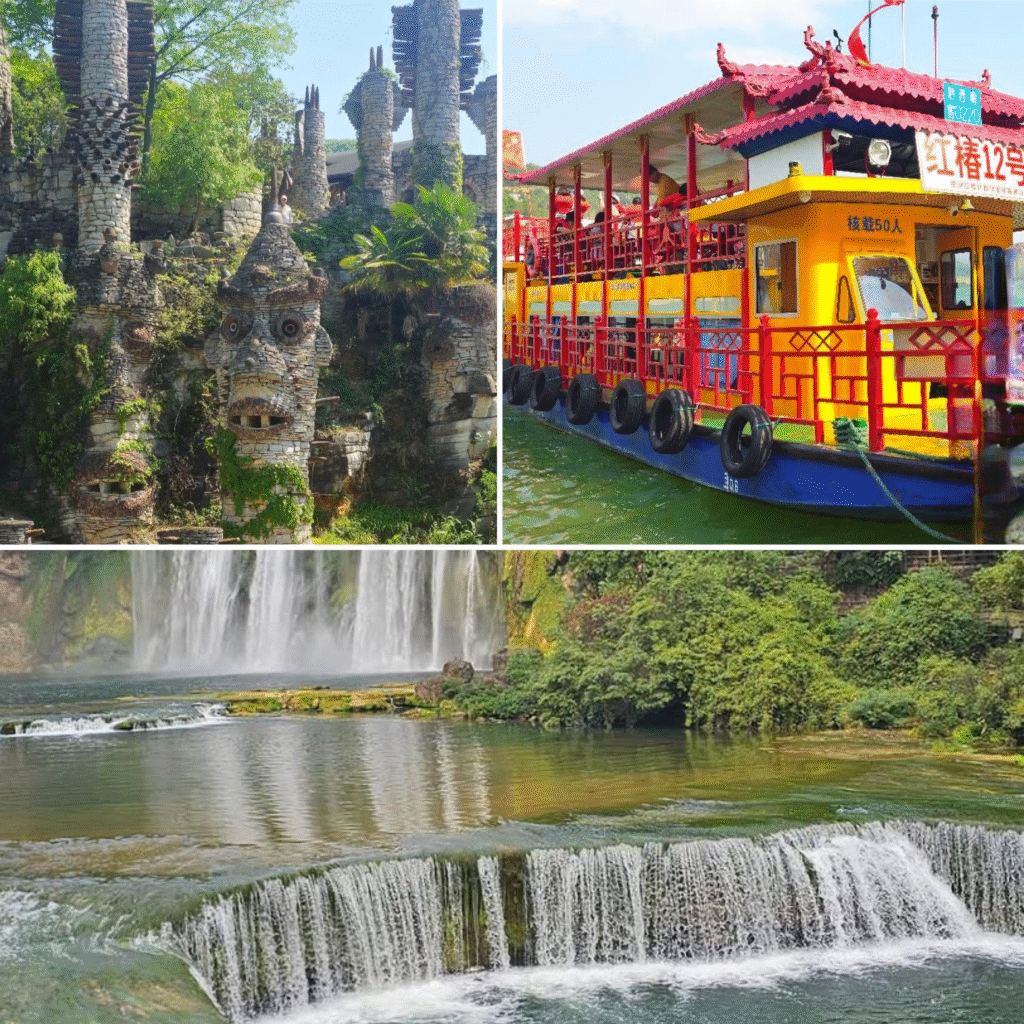
Not far from the city, Yelang Valley felt like stepping into a dream someone refused to explain. Stone sculptures, strange and compelling, stood quietly against the landscape—as if guarding secrets from another time.
Into the Heart of Nature: Libo County
Deeper into Guizhou, the rhythm changed. In Libo County, nature takes over completely—lush, green, almost impossibly alive.
A Memorable Encounter: Ge Lu Ge Sang Miao Village
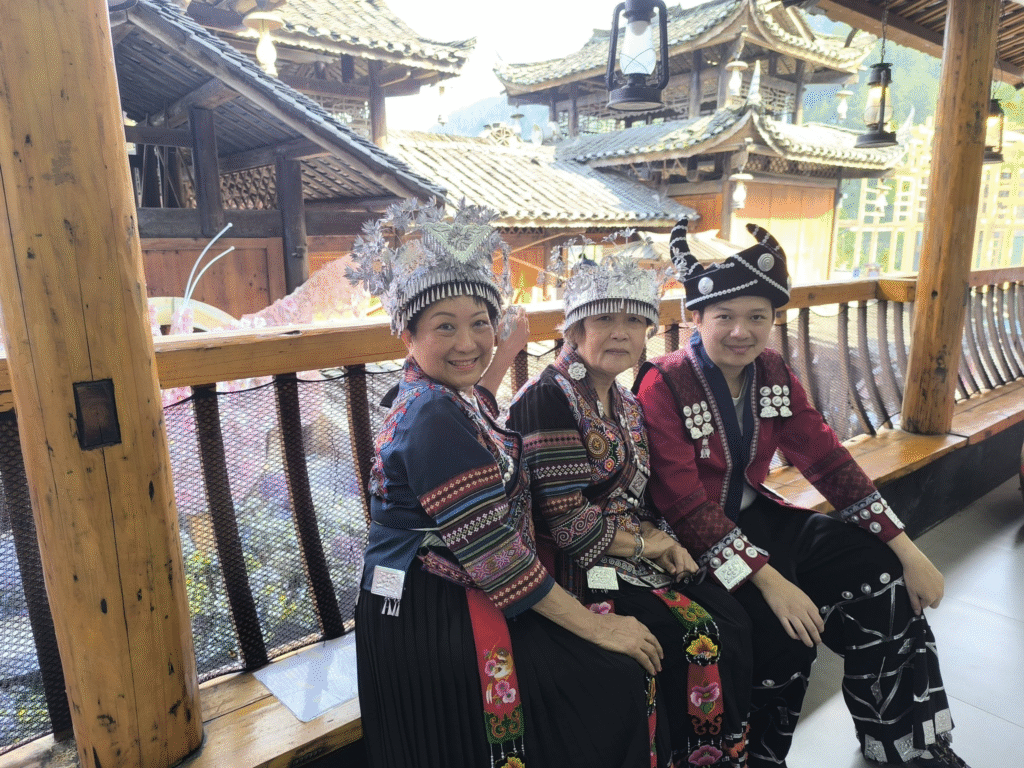
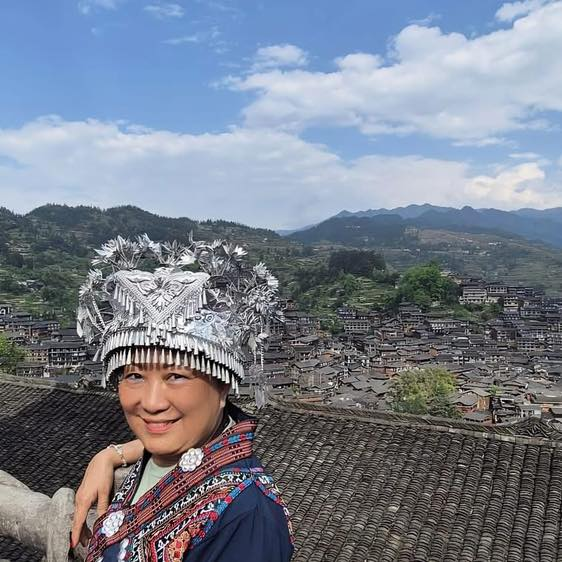
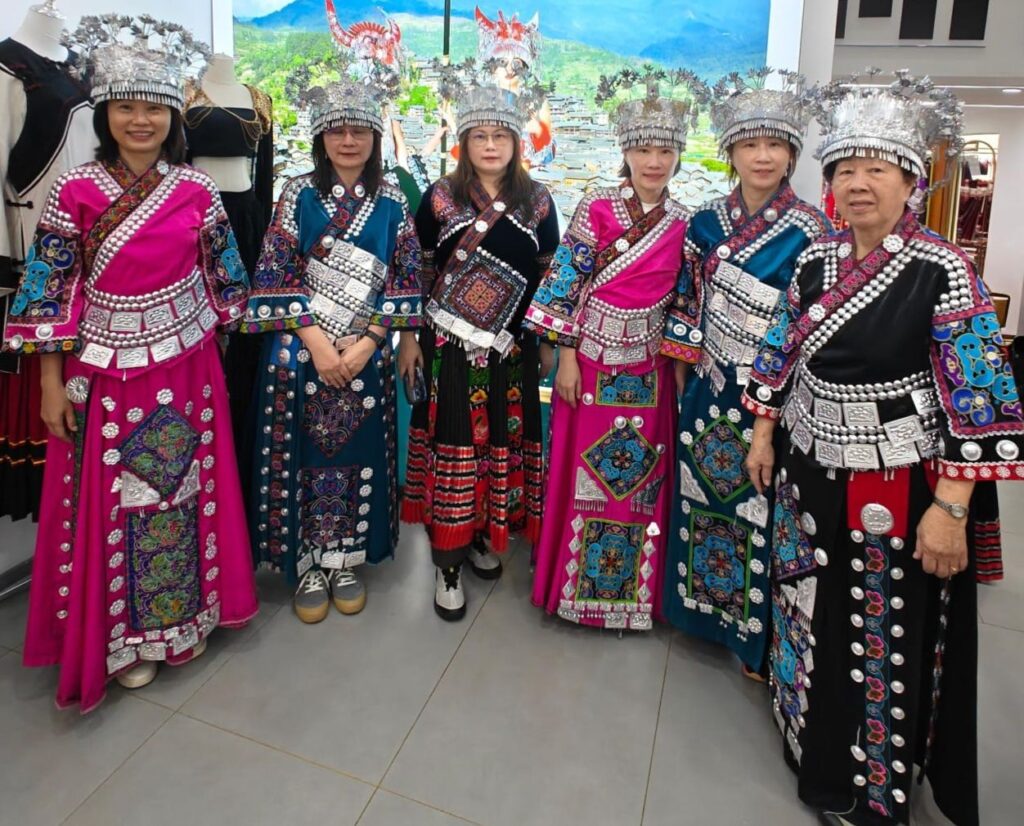
In a Miao village—Ge Lu Ge Sang Miao Village—I found myself laughing harder than I had in a long time.
They dressed me up—not casually, not halfway—but fully, joyfully transformed into a version of myself I barely recognized. Layers of embroidered fabric, intricate patterns, and iconic silver adornments.
It wasn’t just a costume—it was identity, history, pride. I caught my reflection and couldn’t help but grin. It was playful, yes—but also grounding, like stepping into someone else’s story for a moment.
Who Are the Miao?
The Miao (苗族) are an ethnic minority with a long and complex history, believed to have migrated over centuries from northern China into the mountainous southwest.
Today, they are spread across several provinces, but Guizhou has the largest population. It is often considered the cultural heartland of the Miao, where many traditions, clothing styles, and festivals have been preserved for centuries.
Life in Guizhou’s Miao Villages
In Guizhou’s rugged hills and terraced landscapes, many Miao communities still live in villages deeply connected to tradition.
Places like Xijiang Qianhu Miao Village—often called the “Thousand Household Miao Village”—offer a glimpse into this way of life, with wooden stilt houses cascading down the mountainside.
Agriculture, especially rice farming, remains central, alongside craftsmanship such as embroidery and silverwork.
Traditional Dress and Craftsmanship
One of the most striking aspects of Miao culture is their elaborate traditional clothing. Women wear intricately embroidered garments paired with large, ornate silver headdresses and jewelry.
These are not merely decorative—they symbolize identity, status, and heritage.
Festivals and Music
Miao culture is rich in festivals—colorful, musical, and deeply symbolic.
One of the most famous is the Miao New Year, celebrated with dancing, singing, bullfighting, and communal feasts.
Beliefs and Traditions
Traditional Miao beliefs often center around animism and ancestor worship, though practices vary.
Rituals, storytelling, and oral traditions play a vital role in preserving history and passing down values.
The True Meaning of Hospitality
“Hospitality” sounds polite. What the Miao offer is something else entirely.
You don’t just get welcomed—you get fed. And fed again. And then encouraged—sometimes insistently—to drink.
Sharing food and rice wine is a long-standing tradition of honoring guests. Saying no feels like missing the point.
At one moment, I remember thinking, “Surely this is the last cup.”
It was not.
There’s a rhythm—songs, laughter, and toasts that come faster than expected. Eventually, you stop counting and surrender to the joy. It’s generous, overwhelming, and honestly… hilarious. A kind of joyful ambush.
Huangguoshu Waterfall: Power in Motion
At Huangguoshu Waterfall in Anshun, the sheer force of water was humbling.
Standing there, feeling the mist on your skin, you understand why it’s one of China’s most famous waterfalls—it doesn’t just look powerful, it feels alive.
Wanfeng Lake: A Moment of Stillness
A boat ride across Wanfeng Lake near Xingyi offered a different kind of beauty.
Gliding through still water framed by karst peaks, the calm felt almost surreal. Occasionally, Jilong Castle appeared in the landscape like something borrowed from a fairytale.
Wanfenglin: The Forest of Ten Thousand Peaks
Then came Wanfenglin—the Forest of Ten Thousand Peaks.
Endless green hills rolling into the horizon, each echoing the next. It’s the kind of place that makes you quiet without asking you to be.
Tianhe Pool Scenic Area: A Final Impression
Back near Guiyang, Tianhe Pool Scenic Area offered a gentle reminder of Guizhou’s diversity—caves, water, and forest coexisting in natural harmony.
Modern Challenges
While tourism has brought economic opportunities—especially in places like Xijiang—it also raises concerns about cultural preservation and commercialization.
Younger generations often move to cities, creating tension between maintaining traditions and adapting to modern life.
Conclusion
If there’s one thing Guizhou does well, it’s this: it doesn’t try to impress you in obvious ways—it quietly wins you over.
Somewhere between the mist of Huangguoshu Waterfall, the layered peaks of Wanfenglin, and the laughter-filled toasts in a Miao village, you realize this isn’t a place you just visit—you experience it.
What stays with me most isn’t just the landscapes.
It’s the feeling of being pulled into something—into laughter, into tradition, into moments where you’re no longer just observing, but participating.
Guizhou didn’t just show me its beauty.
It made sure I felt it.