
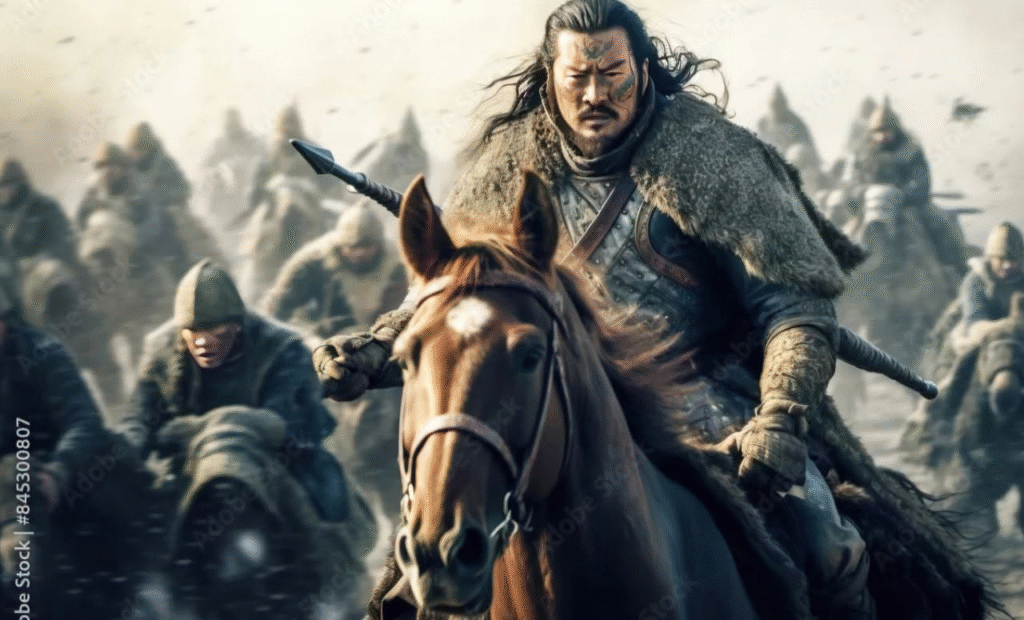
My first truly unforgettable sight on the grasslands was not the endless horizon or the traditional yurts dotting the landscape. It was the horses.
In the distance, a herd appeared, galloping across the grasslands with breathtaking speed. As they drew closer, I could see the riders urging them through their paces. The horses thundered across the steppe in perfect rhythm, their manes flowing in the wind as clouds of dust rose behind them.
Then came the acrobatics.
The riders seemed to become one with their horses, performing astonishing feats of balance and skill while riding at full speed. Some stood upright in their stirrups, while others leaned dramatically from the saddle, displaying a level of horsemanship that could only have come from a lifetime spent on horseback. There was no visible struggle between man and animal. Instead, there was harmony, trust, and an extraordinary partnership forged through centuries of tradition.

Watching hordes of horses galloping together in tandem was both exhilarating and humbling. For a moment, I felt as though I had been transported back eight hundred years to the time of Genghis Khan. It was easy to imagine Mongol warriors racing across these very grasslands, their horses carrying them swiftly over vast distances as they built an empire that would change the course of history.
In that moment, I understood why the horse occupies such a special place in Mongolian culture. To the Mongols, the horse was never merely a means of transport. It was a companion, a source of survival, a symbol of freedom, and the foundation upon which an empire was built.
There are some journeys that take us to beautiful places, and there are others that transport us back in time. My recent visit to Inner Mongolia was one of those rare experiences that did both.
For many years, I had read about the legendary Mongol warrior, Genghis Khan, and the vast empire he built from the windswept steppes of Central Asia. Yet no book, documentary, or history lesson could fully prepare me for the feeling of standing on the endless grasslands of Inner Mongolia, where the horizon seemed to stretch forever beneath an enormous blue sky.
It was here, amid these rolling grasslands, that I began to understand how the Mongols lived and thrived for centuries. Long before cities, highways, and modern conveniences appeared, the Mongols were nomadic people who followed their herds across the steppes in search of fresh grazing land. Their lives revolved around horses, sheep, cattle, and the changing seasons. Mobility was not simply a way of life—it was a necessity.
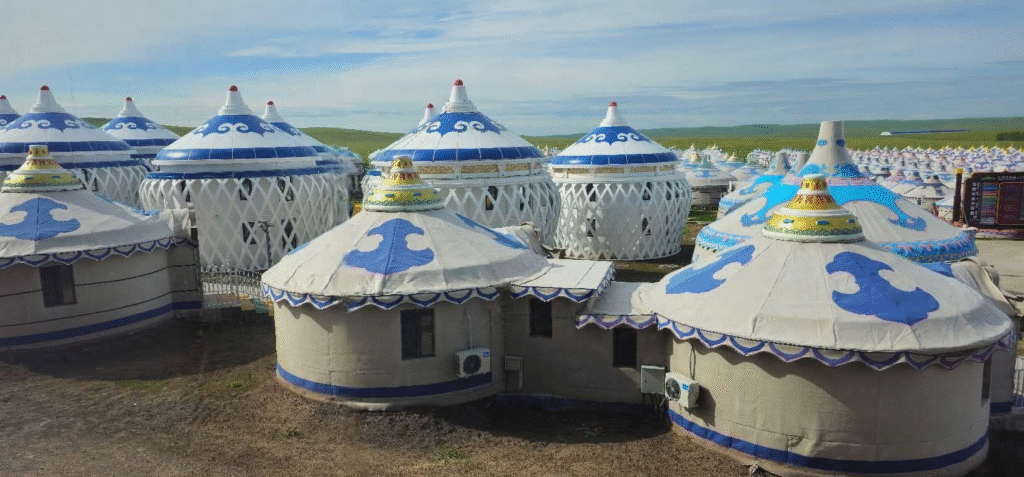
The Mongols lived in portable round tents known as yurts, designed to be assembled, dismantled, and transported as families moved from place to place. During my stay on the grasslands, I had the opportunity to sleep in a modernized yurt. While equipped with comforts unimaginable to the early Mongols, it still offered a glimpse into a lifestyle shaped by nature rather than by walls and boundaries.
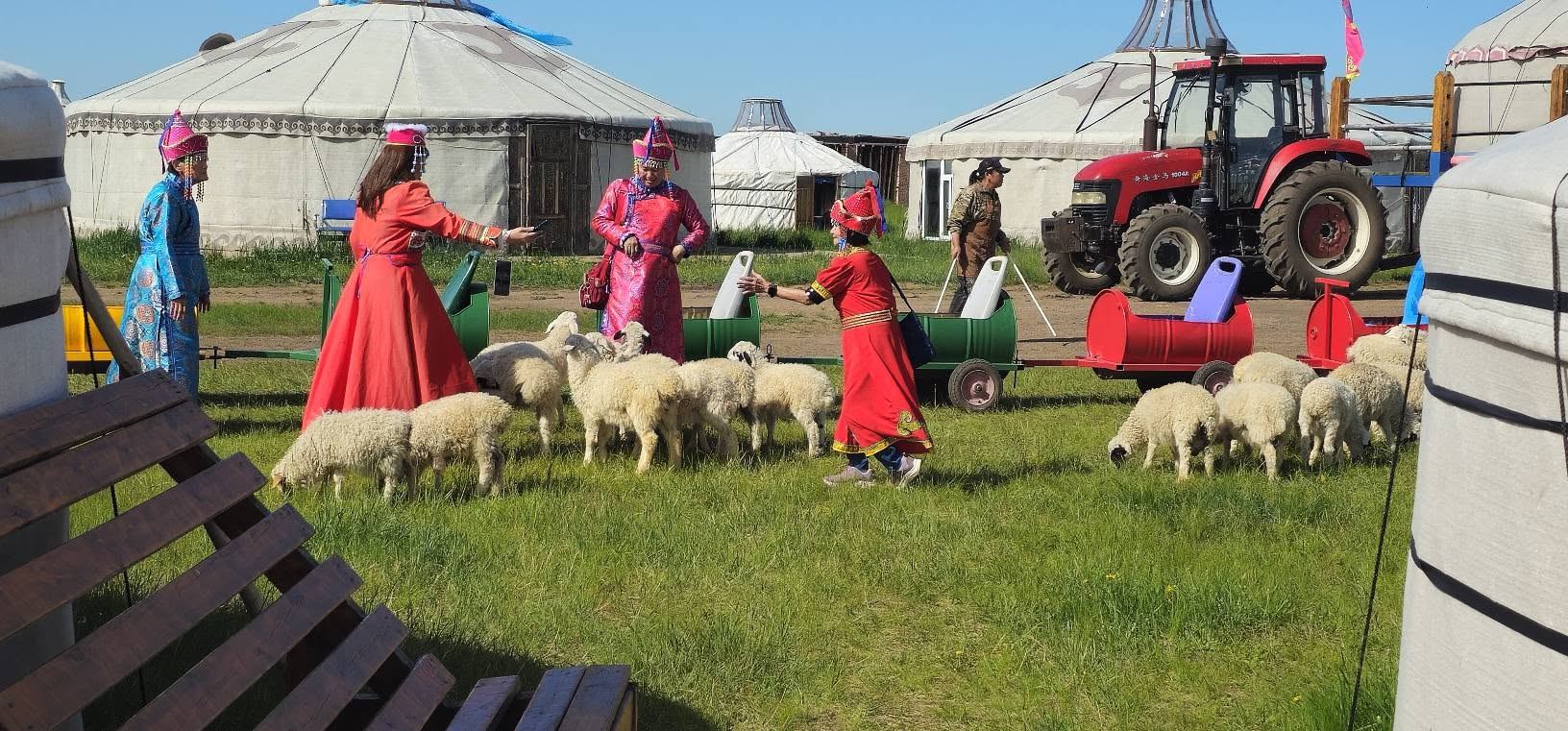
As I stepped outside in the morning, I found myself imagining what life must have been like eight centuries ago. The vast openness of the landscape made it easy to see why horses became central to Mongol life and warfare. A skilled rider could travel great distances across the grasslands, carrying news, supplies, or weapons. It was from these seemingly endless steppes that Genghis Khan united rival tribes and forged one of the largest empires in human history.
Born as Temüjin in the twelfth century, Genghis Khan transformed a collection of competing clans into a powerful and disciplined force. His armies conquered vast territories that stretched across much of Asia and reached into Europe. His descendants continued his expansion, creating an empire that connected East and West through trade routes, diplomacy, and cultural exchange.
Although history often remembers the Mongols primarily as fierce warriors, their influence extended far beyond the battlefield. They helped secure and expand trade along the Silk Road, encouraging the movement of goods, ideas, technologies, and cultures between distant lands. The impact of Mongol rule can still be seen today in the histories and traditions of many countries they once governed.
Yet standing on the grasslands, it was not thoughts of conquest that stayed with me most. It was the resilience of a people who learned to survive and prosper in one of the world’s most challenging environments. The Mongols developed a culture built upon adaptability, independence, hospitality, and a deep connection to the land. These values continue to shape life on the steppes even in the modern era.
For a brief moment, I was able to step away from my own busy world and experience a small part of that heritage. Watching horses graze across the grasslands, feeling the wind sweep across the open plains, and spending the night in a yurt allowed me to appreciate the simplicity and freedom that characterized the lives of the early Mongols.
My journey to Inner Mongolia was more than a holiday. It was an opportunity to walk through a living chapter of history, to gain a deeper understanding of one of the world’s most influential civilizations, and to appreciate the enduring spirit of a people whose story continues to captivate the imagination centuries later.
The grasslands may have changed over time, but their power remains the same. Standing beneath that vast Mongolian sky, I felt connected not only to a place but also to the remarkable history that unfolded there—a history of nomads, warriors, empire builders, and a way of life that still echoes across the steppes today.
As my time on the grasslands of Inner Mongolia came to an end, I found myself reluctant to leave. There was something deeply moving about standing beneath an endless sky, watching horses roam freely across the steppes, and experiencing—even briefly—a way of life that has endured for centuries.
History often remembers the Mongols for their conquests and the vast empire forged by Genghis Khan and his descendants. Yet my journey revealed something equally remarkable: the resilience, adaptability, and enduring spirit of a people shaped by the land they call home. The grasslands taught them self-reliance, the horse gave them mobility and strength, and their nomadic traditions fostered a deep respect for nature and community.
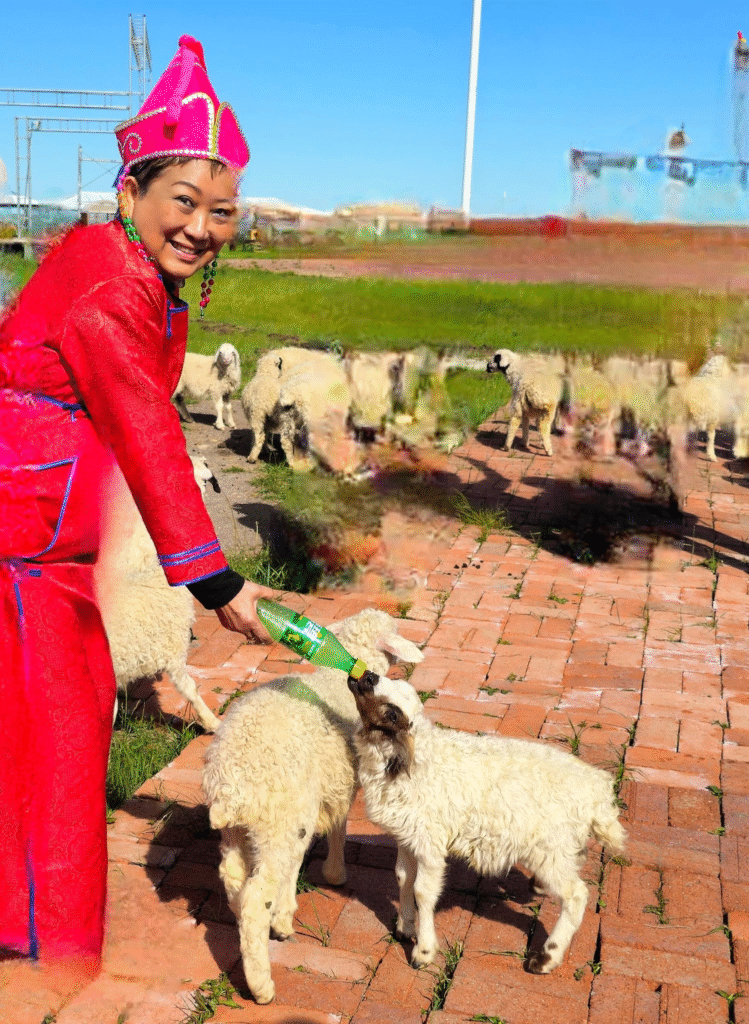
What stayed with me most was not the story of battles won or territories conquered, but the timeless bond between the Mongols, their horses, and the open steppes. Watching rider and horse move together as one, I gained a deeper appreciation for a culture that has preserved its traditions while embracing the modern world.
My journey to Inner Mongolia was far more than a visit to a beautiful destination. It was a journey into the living history of a remarkable people whose influence continues to be felt across Asia and beyond. As I left the grasslands behind, I carried with me not only wonderful memories, but also a renewed appreciation for the courage, freedom, and spirit that have defined the Mongols for generations.
Long after the dust of the galloping horses had settled and the yurts had disappeared from view, the echoes of the steppes remained in my heart—a reminder that some journeys do not simply take us to new places; they deepen our understanding of the people, history, and traditions that have shaped our world.